
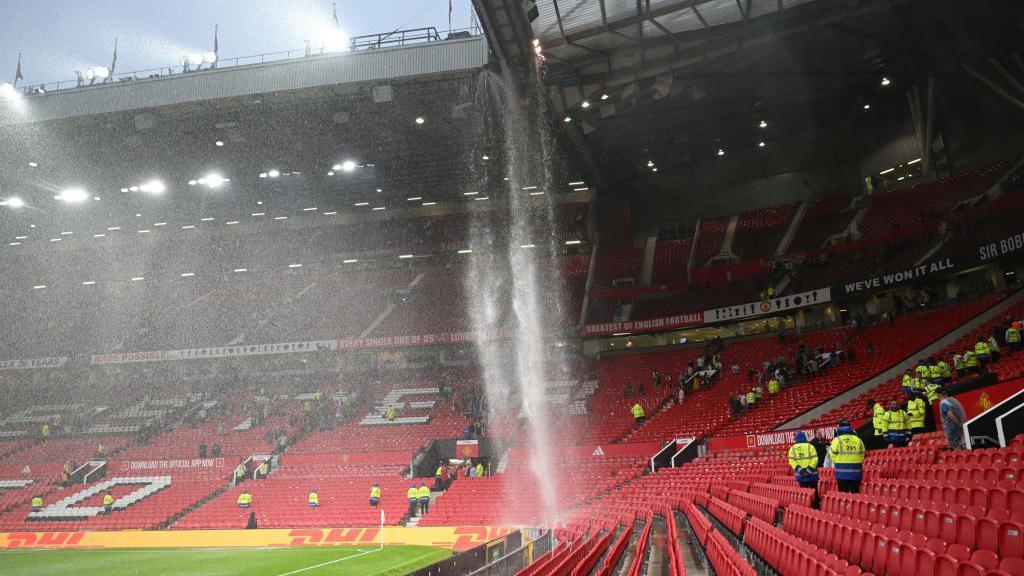
When a once-dominant footballing giant like Manchester United finds itself languishing in 16th place, fans, pundits, and armchair critics scramble to find a scapegoat. Lately, that scapegoat has been Ruben Amorim.
But let’s get one thing clear:
It’s not Amorim’s 491 interviews.
It’s not his 3-4-3 system.
It’s certainly not his man management.
Manchester United’s problem runs higher, and far deeper.

20 Years of Glazer Ownership: The Root of the Rot
The Glazers took over Manchester United in 2005. In nearly two decades of ownership, they’ve turned what was once the most feared club in Europe into a shadow of its former self. Since Sir Alex Ferguson’s retirement in 2013, the club has burned through managers, systems, and players with a revolving door policy—but the constant has always been the ownership.
Let’s talk numbers:
- £1.1 billion spent on transfers in the last decade — the highest in Europe, yet no Premier League titles to show for it.
- Over £1 billion in debt, much of it leveraged during the Glazer takeover, still burdens the club.
- A staggering £960 million paid in interest and dividends—mostly to the Glazer family.
Instead of reinvesting profits into the squad or infrastructure, the Glazers have treated Manchester United like a cash cow, milking it dry while the product on the pitch suffers.
A Historic Low: The 2024/25 Season Collapse
This year has been the worst season on record for Manchester United.
- Currently 16th in the Premier League.
- Just 29 points from 36 games—the lowest point total in club history at this stage.
- Out of every cup competition before the quarterfinals.
- An average xG (expected goals) of just 0.86 per game—ranking 17th in the league.
- Only 5 clean sheets all season—a stat that used to define this club under Ferguson.
This isn’t about tactics. It’s not about player mentality. It’s systemic failure—a top-down collapse.
Omar Berrada: A CEO with No Vision?
The appointment of Omar Berrada was touted as the dawn of a new era. Poached from Manchester City, he was expected to bring structure, discipline, and a winning blueprint. Instead, he’s overseen a historic implosion.
Reports from within Old Trafford suggest confusion, lack of direction, and poor communication between departments. United’s once-feared scouting network is now reactive, not proactive. And the club’s transfer strategies seem driven by commercial potential over footballing logic.
The rot is not just on the pitch—it’s in the boardroom.
Why Ruben Amorim Isn’t the Problem
Critics have targeted Ruben Amorim, but let’s be honest: No manager could succeed under this level of dysfunction. Amorim inherited a fractured squad, no coherent long-term project, and a club that hasn’t backed its manager with proper footballing authority in years.
Let’s not forget:
- Amorim led Sporting CP to their first title in 19 years.
- He transformed young, underdog squads into title challengers in Portugal.
- His win percentage at Sporting was over 65%—far higher than United’s current output.
The issues at United predate him—and they’ll outlast him too, unless something fundamentally changes.
So, What’s Next for Manchester United?
The appointment of Sir Jim Ratcliffe and INEOS as partial stakeholders offered a glimpse of hope. But partial control won’t undo 20 years of mismanagement overnight.
Manchester United doesn’t need another new system, or a different style of play.
It needs a new philosophy, a new ownership model, and most importantly—accountability at the highest levels.
Until the Glazers fully relinquish control and allow football people to run the football club, Manchester United will continue to drift further away from the summit of English and European football.
Final Thought
So when you see Manchester United struggling at the bottom of the table, don’t point your finger at the touchline.
Look higher. Look deeper.
Because Ruben Amorim isn’t the problem. The Glazers are.