
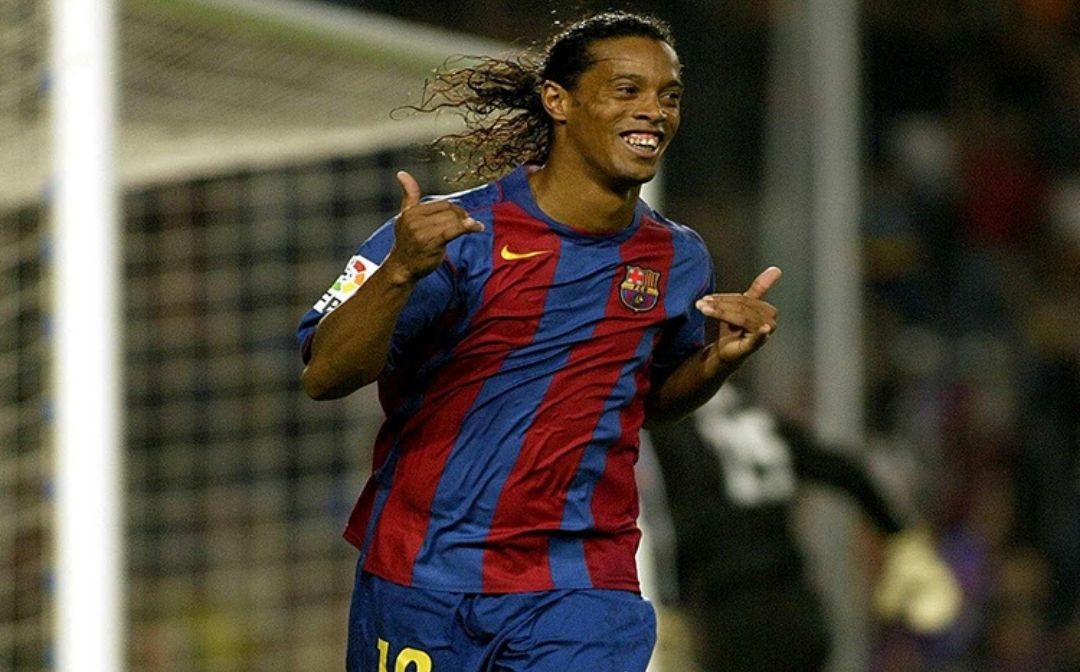
In the rich history of football, certain names transcend the boundaries of time and statistics. One such name is Ronaldo de Assis Moreira, affectionately known to the world as Ronaldinho. With a smile that lit up stadiums and a playing style that defied logic, Ronaldinho didn’t just play the game—he transformed it into an art form. From dusty pitches in Porto Alegre to the grand stages of Europe, Ronaldinho redefined what it meant to be a footballer, leaving an indelible mark on generations that followed.
The Artistry in His Feet
Ronaldinho’s influence goes beyond goals and assists. What made him special was his creativity, his joy, and his improvisation. Whether it was the elastico, the no-look pass, the rainbow flick, or that unforgettable toe-poke goal against Chelsea—every touch was a reminder that football could still be magic.
He played with the spontaneity of street football but executed with the precision of an elite tactician. In an era where systems and structures started to dominate the sport, Ronaldinho brought back a sense of freedom and fun. He reminded the world that football wasn’t just about results—it was about expression.

Inspiring the New Generation
Speak to any modern footballer and they’ll tell you: Ronaldinho was their hero. From Neymar to Mbappé, from Vinícius Jr to João Félix—his name comes up again and again. Lionel Messi, arguably the greatest ever, often credits Ronaldinho for easing his transition into Barcelona’s first team and setting the foundation for his success.
His YouTube highlights have become a rite of passage for every young baller. He was the first footballer to truly go viral, captivating millions with grainy clips of his samba magic. Long before “influencer” was a term, Ronaldinho influenced the world—boots, hairstyles, celebrations, tricks. Kids didn’t just want to be like him—they wanted to enjoy the game like him.
The Smile That Changed the Game
In a profession increasingly driven by pressure and perfection, Ronaldinho stood out for one reason: his smile. Whether it was the Camp Nou or the Maracanã, he played with pure joy. That joy was infectious. Fans fell in love. Rivals applauded. Even the cynical couldn’t help but marvel at his brilliance.
When he received a standing ovation at the Bernabéu in 2005—after destroying Real Madrid with grace and humility—it was more than a football moment. It was a global acknowledgment that Ronaldinho had brought beauty back to the game.
Legacy Beyond the Pitch
Ronaldinho’s legacy isn’t confined to trophies, although he won plenty: a World Cup, a Ballon d’Or, Champions League, La Liga, and Serie A. His real legacy is cultural. He democratized the beautiful game. You didn’t need to be tall, fast, or even disciplined—you just needed a ball and a dream.
He showed that football wasn’t just for the structured academies or wealthy clubs. It belonged to the streets, to the favelas, to the world. His influence blurred the lines between sport and performance, turning matches into dance floors and stadiums into theatres.
Final Whistle
Ronaldinho didn’t just play football—he lived it, breathed it, and elevated it. He taught millions that style matters as much as substance, that smiling while dribbling past defenders is not just possible—it’s poetry.
In today’s world of analytics and tactics, the game still echoes with his legacy. Every backheel, every nutmeg, every audacious lob—it all traces back to a kid from Brazil who believed that football should first and foremost be fun.
Obrigado, Ronaldinho. You changed the game forever.